Teens, adults and people who never learnt to swim
About one in four Australian adults says they are a weak swimmer or cannot swim at all. That is not a small minority hiding at the shallow end. It is millions of people, and a lot of them are standing at the side of a pool right now watching their own children have lessons.
The number that should take the shame out of it
A report prepared for Royal Life Saving by PwC estimated that around 23 per cent of Australian adults report weak or no swimming ability.
Sit with that figure for a second. In any group of four parents at a Canberra pool, statistically one of them is not confident in the water.
Nobody says it out loud. That is the whole problem. The silence makes every individual feel like the only one.
Teenagers are not too late either
The teenage numbers are just as widespread. Teachers estimate that 39 per cent of Year 10 students cannot swim fifty metres and tread water for two minutes.
For the higher standard, the gap is bigger again. Teachers put it at around 84 per cent of fifteen and sixteen year olds who cannot yet swim four hundred metres and tread water for five minutes, which is the national benchmark for seventeen year olds.
So a fifteen year old who avoids the water is not unusual at all. They are in a very large and very quiet group.
Why teens need their own room
A fourteen year old will not learn to swim in a class of six year olds. They will turn up once, decide it is humiliating, and never come back.
That is not stubbornness. It is a reasonable response to being asked to be a beginner in public at the age when being watched matters most.
Aquatots runs its teen pathway outside the regular learn to swim setting for exactly that reason. Same skills, different room, no small children watching.
What a first adult lesson actually looks like
The fear most adults carry is that they will be asked to do something they cannot do, in front of someone. So here is the honest version.
A first lesson happens in standing depth. It is mostly about breathing out underwater and learning that your body floats without your help.
There are no laps. There is no expectation that you will swim anywhere. If putting your face in is the achievement of the day, that is a full and successful lesson.
Adults typically progress faster than young children once the fear settles, because coordination and comprehension are already there. The bottleneck is almost never ability.
The practical questions nobody asks out loud
Wear whatever you would wear to the beach. Nobody is looking, and the instructor has seen every version of nervous there is.
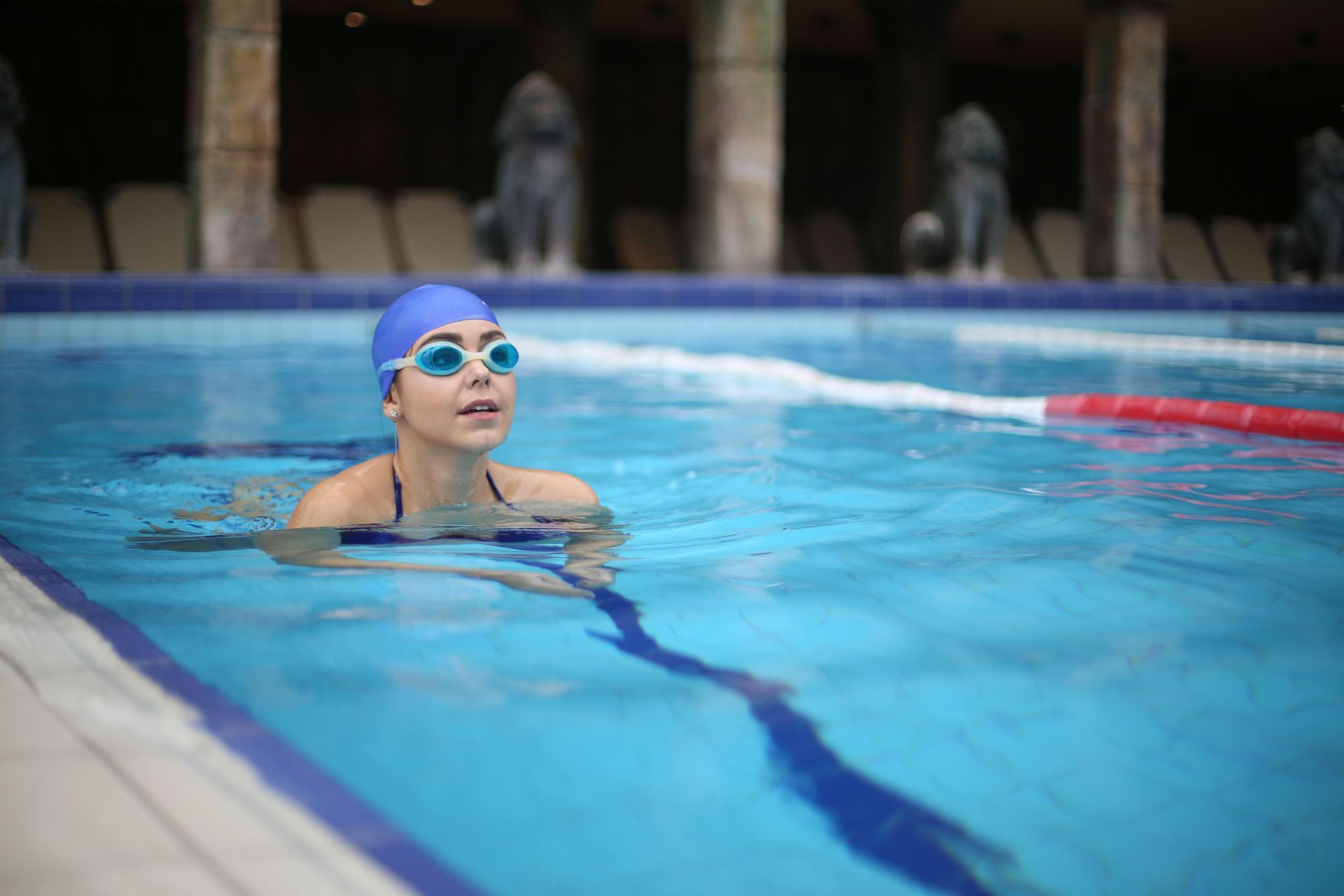
Goggles help more than most adults expect. Being able to see underwater removes a surprising amount of the fear, so bring a pair even if you feel silly buying them at forty.
If a group feels like too much, ask whether a one on one session is possible for the first few. Plenty of adults start that way and move into a group once the water stops feeling like a test.
When the parent is the one who cannot swim
For plenty of families, swimming was simply not part of childhood. That is common among families who arrived in Australia as adults, and it shows up as a specific pattern worth naming.
The children become confident swimmers. The parents stay on the edge. Everyone is safer than they were, but the adult supervising at the beach still cannot help if something goes wrong.
Access for adults who did not grow up swimming here is one of the things we looked at in our own national research.
Closing that gap changes how a family uses water for the rest of their lives. It also removes the quiet worry a lot of parents carry to every pool party.
What Aquatots offers adults and parents
Adult and parent lessons at Aquatots are free. That covers complete beginners and adults who can swim but want their stroke corrected.
There is also free lap time for adults to practise between lessons, because the practice is where the confidence gets built. And the free CPR course for parents runs alongside it.
No dollar figure to weigh up. If you have been meaning to do this for fifteen years, the cost is no longer the reason not to.
Starting is the hard part, so make it small
You do not have to commit to becoming a swimmer. Commit to one lesson in standing depth with someone whose job is to be patient.
For a teenager, have the conversation without an audience and let them ask about the group they would be in. For yourself, just ask about the adult sessions.
Ask us at reception or through our
free information session, and we will tell you what the first session involves before you decide anything.