The 21 Things Every Aquatots Instructor Must Master Before Teaching Their First Lesson
Summary: You arrive at the pool for your child's lesson and see a confident young person in the water, giving clear instructions to a group of small children. They look like they might still be in school.
A quiet question forms. How long have they actually been doing this? Are they really qualified to keep my child safe?
It's a fair thing to wonder. Most parents wonder it and never say it out loud.
So here is the honest answer, including the part you never get to see from the pool deck.
Before They Ever Enter the Water With a Student
A young face on the pool deck does not mean a new instructor. At Aquatots, nobody teaches a lesson until they have already done a great deal of work that no parent ever watches.
Every instructor holds the nationally recognised Teacher of Swimming and Water Safety qualification. This is the same formal credential required right across the Australian swim industry, and it is not optional.
On top of that, every instructor holds a current Working With Children check. It runs for five years, and staff fund it themselves before they start.
Then comes the part that is specific to Aquatots: Boot Camp. Before a new instructor is given a single lesson of their own, they complete 40 to 50 hours of internal training. That happens before a roster spot even exists for them.
By the time you see someone teaching, they have already proven they are ready. The lesson you are watching is not where their training began.
The 21-Module Dojo Certification
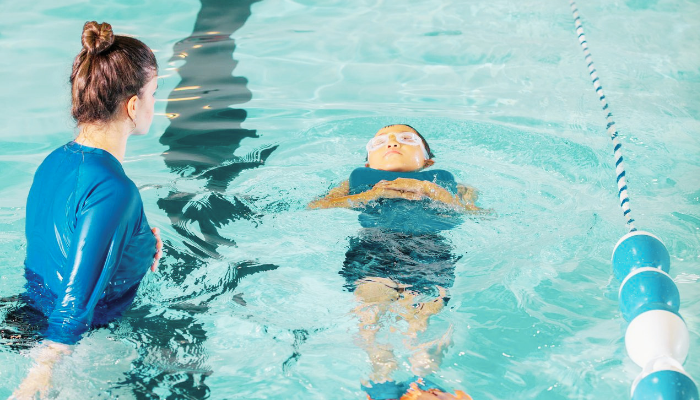
The qualification gets an instructor in the door. The Dojo is how Aquatots builds the rest.
The Dojo is a 21-module certification program that Aquatots built in-house. It was developed by Aquatots and refined over years, not bought off the shelf from a curriculum provider.
The modules are not 21 boxes to tick. They cover the real categories of mastery an instructor needs in the water every day.
Those categories include in-water teaching technique, reading child development and readiness, safety and emergency response, clear communication with both children and parents, and professional conduct on the deck.
Put simply, the Dojo turns a qualified swim teacher into an Aquatots instructor. Those are two different things, and the difference is the whole point.
What Keeps the Standard High After Day One
Plenty of training programs end the day someone is hired. This one does not.
Every Aquatots instructor renews their CPR certification every year, and Aquatots covers the cost. Water safety changes, skills fade, and an annual refresh keeps everyone sharp.
Four times a year, the whole team has a professional development day. These are run in-house, Aquatots pays for them, and they happen every single term.
Instructors are never left to figure it out alone, either. Lesson plans are provided, and there is an in-lesson support team ready to step in for any instructor who needs a hand.
There is one more layer that matters more than any of the above. The management and ownership team are still in the water themselves, teaching and watching. The people who set the standard are the people checking it firsthand.
What They Are Actually Watching For in Every Lesson
All of that training produces something you can see, once you know to look for it.
A trained Aquatots instructor is doing far more than counting laps. They are watching breath control, reading whether a child is emotionally ready for the next step, and noticing small changes in how a child moves through the water.
Then they adjust, lesson by lesson, child by child. That constant reading and adjusting is the skill the whole training pathway is built to produce.
It looks calm and simple from the side of the pool. That calm is the result of a lot of preparation you were never meant to notice.
The Part That Surprises Most Parents
Here is something worth sitting with. Of the current Aquatots team, 53 instructors first came through the program as students themselves.
They learned to swim at Aquatots as children. They grew up in these pools, and they chose to come back and teach the next generation.
So that confident young person on the pool deck may know this program more deeply than almost anyone. They lived it from the inside, then trained for years to teach it.
So, Back to the Question You Had
That instructor you watched at the start, the one who looked too young to be an expert, has done all of this before earning a place in the water with your child.
The qualification. The Working With Children check. The 40 to 50 hours of Boot Camp. The 21 Dojo modules. The annual CPR. The four PD days a year. And, for many of them, a childhood spent learning the very thing they now teach.
You were never meant to see most of it. That is exactly why it is worth knowing.
If you would like to see how it all comes together for your own child, you can book a free information session with us and ask us anything.