5 Myths About School-Aged Advanced Swim Programs Parents Still Believe
Table of Contents
- Introduction: "Can Swim" vs "Water Safe"
- 1. Myth: Swimming a lap means they're safe
- 2. Myth: School swimming has it covered
- 3. Myth: Swimming is like riding a bike
- 4. Myth: My confident kid is a safe kid
- 5. Myth: Too young or too old for advanced programs
- The Bottom Line: Real Water Safety
- Frequently Asked Questions
Nearly half of Year 6 students in Australia can’t swim 50 metres or tread water for two minutes. That's the basic national benchmark for water safety. Not advanced skills. The basics.
This gap between what parents think their kids can do and what they can actually do in the water is a real problem. And a lot of it comes down to myths that keep getting passed around at school pick-up and family barbecues.
Here are five myths about school-aged swim programs that need to go.
Myth 1: My kid can swim a lap, so they're water safe
Your child swims a lap at the local pool and you breathe a sigh of relief. Job done, right?
Not quite.
Swimming one lap is an achievement worth celebrating. But it's the starting point of water safety, not the finish line. Australian national benchmarks expect a lot more from kids as they grow. By age 12, children should be able to swim 50 metres continuously and tread water for 2 minutes. By age 17, it rises to 400 metres of swimming without stopping, 5 minutes of treading water, and the skills to survive while wearing heavy clothes.
That warm, clear pool where your child swims is very different from the rivers, creeks, and beaches where many teens drown. Rivers and creeks alone account for 27% of all Australian drowning deaths. These environments have currents, waves, cold water, unclear depths and underwater hazards.
A child who swims well at the aquatic centre might not be ready for a sudden fall into a river or dam. Here's a surprising fact for parents: 70% of toddler drownings happen during non-swim times when kids are in regular clothes. This is exactly why the national benchmarks include survival swimming in clothing.
Myth 2: School swimming has it covered
Many parents think that since swimming is in the school curriculum, their kids will learn water safety. The reality is different.
Royal Life Saving Australia's 2025 research found that 31% of Australian schools don’t provide learn-to-swim programs at all [ISSUU]. Cost pressures, staffing shortages, and time limits make it hard for many schools to provide effective swimming education.
Where programs do exist, they typically run as brief intensive blocks of just 1-2 weeks per year. That's not enough consistent practice for genuine skill development. Royal Life Saving CEO Dr. Justin Scarr has warned that we could create a generation with very poor swimming skills. He emphasized the need for coordinated investment in school swimming programs.
The numbers back this up. In Victoria, even with mandatory curriculum requirements, 40% of children finish primary school unable to swim 50 metres. By Year 10, 39% of students still cannot meet the Year 6 standard.
School swimming gives valuable exposure. But it cannot replace regular, ongoing lessons.
Myth 3: Swimming is like riding a bike
Parents often assume that once their child learns to swim, they'll never forget. Like riding a bike.
Research tells a different story.
A Dutch study showed that just 56% of children could do 5 basic swimming skills 18 months after learning them. For younger children, the regression happens even faster. Australian swim schools see clear skill regression in kids under 6 after just 2-4 weeks away from the water.
The COVID-19 pandemic showed this clearly. After pool closures, 55% of Australian parents noticed their child's swimming skills declined. Also, 42% reported that their kids could swim shorter distances. Royal Life Saving warned that over 10 million missed lessons could lead to "a generation of non-swimming children."
Summer-only swimming creates a similar problem. Children who stop lessons in winter usually have to repeat levels when they come back. That means paying twice for the same skills. Year-round lessons cost more overall, but they lead to better results. Kids keep their skills and keep improving.
Myth 4: My confident kid is a safe kid
This might be the most dangerous myth of all.
A child who eagerly jumps into the pool and splashes around happily looks safe to most parents. But confidence and competence are two very different things. Willingness to swim, lack of fear, and excitement don’t show real survival skills.
The research paints a concerning picture. Though 61% of parents think their kids can swim 50 metres, only 48% of 11-12-year-olds can actually do it, according to independent assessments. Parents overestimate 1 in every 5 swimming skills their children have mastered. Parents worry that kids can save themselves from drowning by age 6.21. This belief greatly overestimates what children can actually do.
The fearless child who dives straight in may actually be at greater risk than a cautious peer. Overconfident swimmers take more risks, go into deeper water, and overlook their limits.
Here's a stat that catches parents off guard: about 66% of people who drown worldwide can swim.
Myth 5: My child is too young (or too old) for advanced programs
Some parents believe their child should be a certain age for advanced programs to be useful. Others believe their child has "missed the window" if they didn't start young.
Both assumptions limit kids unnecessarily.
Australian frameworks focus on ability-based progression, not age-based. The American Academy of Pediatrics suggests swim lessons for drowning prevention from age 1. Babies can start water familiarisation programs as early as 3-6 months.
Older kids and teens who can't swim yet often learn faster than younger beginners. This is because they have better cognitive skills and longer attention spans.
The "natural swimmer" concept is itself a myth. Humans must learn to swim. Early talent often shows more water exposure and comfort than natural skill. Research on over 500 swimmers showed that the fastest ones created the least drag. Technique, not physical attributes, was the primary determinant.
This is paragraph text. Click it or hit the Manage Text button to change the font, color, size, format, and more. To set up site-wide paragraph and title styles, go to Site Theme.
The bottom line
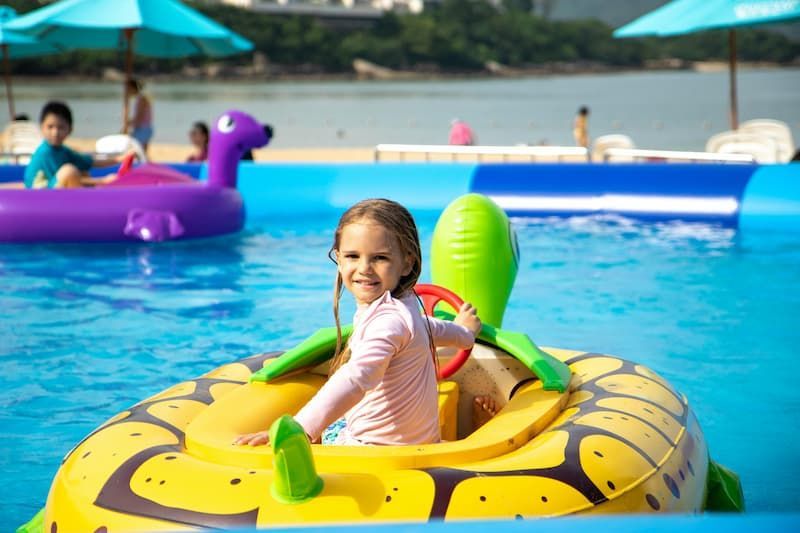
True water safety requires demonstrated skills, not just enthusiasm. Pool swimming doesn't equal open water safety. Skills fade without consistent practice. Confidence can actually increase risk. And it's never too early or too late to progress.
Focus on four key pillars:
- Supervise
- Restrict
- Teach
- Respond
These pillars guide their approach to water safety.
Swimming lessons fit into that "Teach" pillar. Research shows that 70% of children leave lessons before they learn key survival skills.
The goal isn't a child who looks comfortable in water. It's someone who can handle sudden situations, spot danger, and react well in emergencies.
Frequently asked questions
What does “water safe” actually mean for school aged kids?
Water safety means more than swimming a lap. It includes swimming distance, treading water, floating, survival skills and coping in open water and clothes.
Is swimming one lap really not enough?
It is a great start, but it is not the benchmark. By around age 12, kids should be able to swim 50 metres and tread water for two minutes to meet basic safety standards.
Does school swimming give my child everything they need?
School programs help, but they are usually short and inconsistent. Most schools cannot provide enough time or practice for strong skill development.
Can kids forget how to swim if they stop lessons?
Yes. Swimming skills fade quickly without regular practice, especially in younger children. Even confident swimmers can lose endurance and technique.
My child is confident in the water. Isn’t that a good sign?
Confidence is helpful, but it does not equal safety. Confident kids can take more risks, which can actually increase danger if skills are not strong enough.
Is my child too young for advanced swim skills?
Advanced does not mean extreme. Programs should be ability based, not age based. Even young kids can learn age appropriate survival skills.