Active Play at Home: Balancing Physical Skills with Early Learning
Summary: Movement is one of the most powerful ways young children learn.
Simple active play at home, especially swimming-inspired activities, builds focus, confidence, and early learning skills. You don’t need extra time or fancy resources, just consistent, playful movement woven into everyday life.
Between the school runs, meal prep, and the never-ending pile of washing, it can feel like there's never enough time or energy left to "teach" your child something new.
Here's the good news: you probably already are.
Learning in early childhood doesn't need to look like worksheets or flashcards. For children aged one to seven, some of the most powerful learning happens when they're moving, playing, climbing, and splashing.
Children who move regularly – especially those who swim – tend to do better with things like following directions, remembering stories, and early maths. Some studies have shown they can be up to 20 months ahead of their peers in these areas.
That's not a small number. And the best part? The movement principles behind those results can be practised at home every single day.
Why physical play supports early learning
The old idea that movement and thinking are separate has been put to rest.
The connection between movement and learning is well established. Children who develop strong physical skills early on tend to have bigger vocabularies, better attention spans, and stronger problem-solving abilities. In simple terms: the more they move, the more they learn.
Two sensory systems explain a lot of this connection:
- The vestibular system (balance and spatial awareness from the inner ear).
- The proprioceptive system (body position awareness from muscles and joints).
Both need physical movement to develop properly. Even something as simple as 15 minutes on a swing can help a child feel calmer and more focused for hours afterward.
When children push, pull, carry, climb, and tumble, they're not just burning energy. They're building the brain architecture for attention, emotional regulation, and confidence.
What swimming teaches us about learning through play
If you've watched your child in a swim lesson, you've already seen these principles at work.
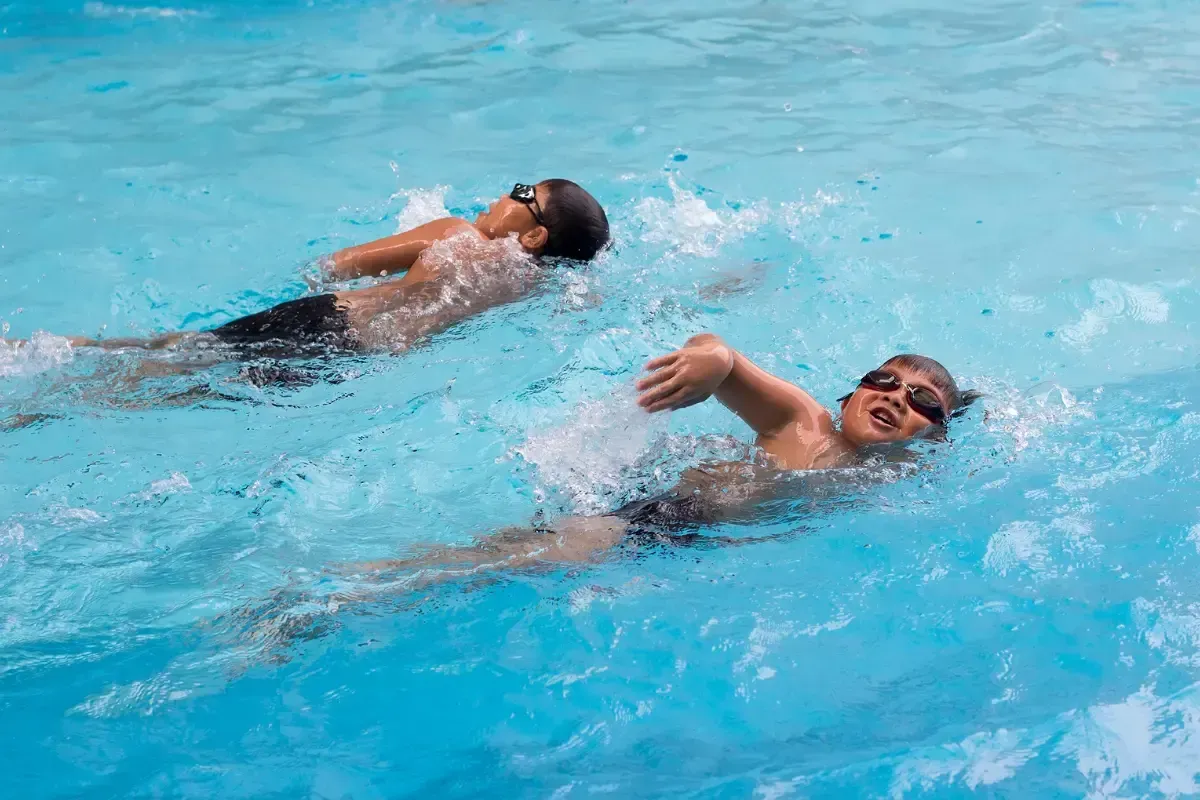
Swimming is built on repetition that leads to mastery. Your child practises the same kick, the same reach, the same breath pattern until it becomes second nature. That's how all skill-building works – in the pool and on dry land.
Swim lessons also introduce small, manageable challenges. A child who learns to put their face in the water is building the same kind of courage they'll use when trying a new food, starting at a new school, or speaking up in a group. Calm, patient guidance from an instructor helps children persist through discomfort rather than avoid it.
Children who swim regularly often show stronger communication skills and are more confident socially and emotionally. The benefits go well beyond water safety – swimming genuinely helps build the whole child.
Simple active play ideas you can do at home
You don't need a pool, fancy toys, or a dedicated playroom. These ideas use things you already have at home, and each one connects to a real developmental benefit.
Pretend swimming" on the floor
Have your child lie on their tummy and practise flutter kicks and arm strokes. This builds core strength, bilateral coordination, and body awareness – the same skills they develop during swim lessons.
Cushion obstacle courses
Lay out pillows, towels, and low furniture for climbing over, crawling under, and balancing on. This kind of play trains balance and body awareness. It also encourages problem-solving as your child works out how to navigate each challenge.
Rhythm and movement games
Clap, jump, pause. Simple rhythm games build listening skills, coordination, and impulse control. Early learning centres like Wonderschool Canberra use music and movement activities to support language development, spatial awareness, and gross motor skills in young children.
Water play in the bath or backyard
Pouring between cups builds fine motor skills. Squeezing sponges strengthens grip. Blowing bubbles in the bath practises the same breath control used in swimming – and it also strengthens the oral motor muscles involved in speech development.
Animal walks
Bear crawls, crab walks, and frog jumps provide deep input that helps children feel grounded, calm, and aware of their bodies. These ‘heavy work’ activities are a great way to help children self-regulate.
Supporting confidence, not performance
Children don't need to ‘get it right’ during play. They need to feel safe enough to try.
Rough-and-tumble play – wrestling, tickling, chasing – isn't just fun. It actually helps children learn to manage their emotions, read social cues, and stay in control. The key ingredient? Parents who keep things playful and let children lead.
Praise effort over outcomes. "You kept trying even when it was tricky" does more for a child's development than "good job" ever will.
Let your child adapt activities to suit them. If the obstacle course turns into a pillow fight, that's still movement, connection, and learning.
Keep it joyful. The moment play becomes a chore, its developmental value drops.
At Aquatots, we see this every day. Children who feel safe and supported in the water become braver, more curious, and more willing to try new things. The same principle applies at home.
Play builds skills for life
Active play supports learning, wellbeing, and confidence all at once. It helps children feel capable in their bodies and calm in their minds. It builds the coordination, balance, and body awareness that underpin everything from handwriting to emotional regulation.
And it does all of this without worksheets, screens, or pressure.
The small moments matter. Every splash, tumble, kick, and stretch builds the foundation for learning.
Frequently asked questions
How does active play support early learning?
Active play strengthens the brain-body connection. When children move, they develop balance, coordination, attention, and emotional regulation, all of which support reading, maths, and classroom readiness.
Do children really learn more when they move?
Yes. Research shows children who move regularly often have stronger memory, language, and problem-solving skills. Movement helps wire the brain for learning in the early years.
How much active play does my child need each day?
Young children benefit from regular movement throughout the day. This doesn’t need to be structured exercise. Short bursts of climbing, crawling, dancing, and playful movement all count.
Can swimming-inspired play at home make a difference?
Absolutely. Practising pretend swimming, breath control in the bath, or balance games helps build core strength, coordination, and confidence, even outside the pool.
What if my child struggles with coordination or confidence?
Start small and keep it playful. Celebrate effort, not perfection. Safe, repeated movement experiences help children feel more capable over time.
Do I need special equipment for developmental play?
No. Pillows, towels, a backyard, or even a hallway can become the perfect space for active learning. Consistency and encouragement matter more than equipment.